Bluedose

Quick answer
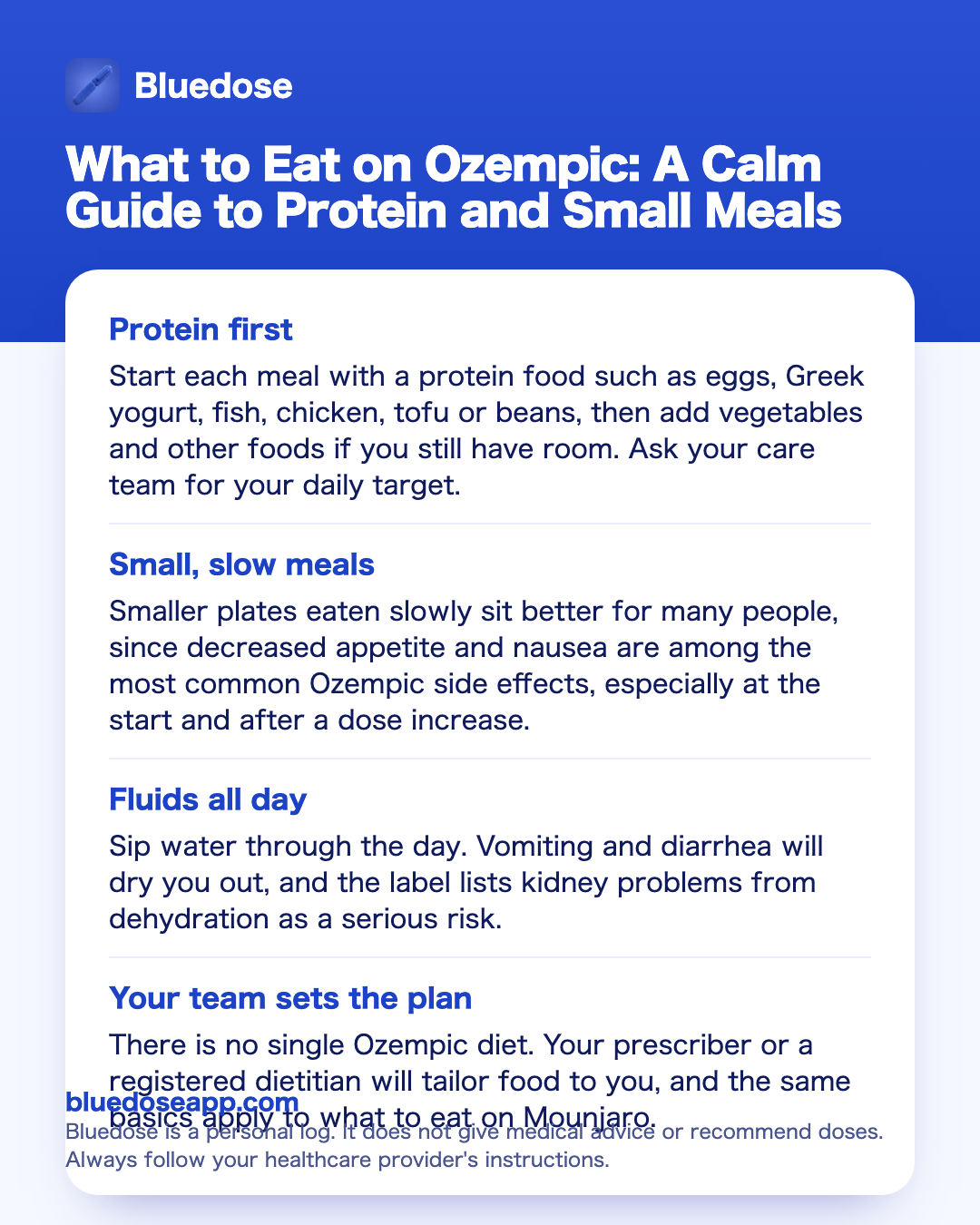
- Protein firstStart each meal with a protein food such as eggs, Greek yogurt, fish, chicken, tofu or beans, then add vegetables and other foods if you still have room. Ask your care team for your daily target.
- Small, slow mealsSmaller plates eaten slowly sit better for many people, since decreased appetite and nausea are among the most common Ozempic side effects, especially at the start and after a dose increase.
- Fluids all daySip water through the day. Vomiting and diarrhea will dry you out, and the label lists kidney problems from dehydration as a serious risk.
- Your team sets the planThere is no single Ozempic diet. Your prescriber or a registered dietitian will tailor food to you, and the same basics apply to what to eat on Mounjaro.

Best overall: Bluedose
Bluedose makes the protein-first habit visible: add protein with one tap and watch your daily goal fill up. Check-ins for food noise and side effects, with notes, show which meals sit well and which do not, right next to every shot in your history. It is a personal log, not a food database, so it keeps your attention on the few things that matter on Ozempic.
Free on the App StoreWhy eating changes on Ozempic
Ozempic (semaglutide) is a once-weekly injection for type 2 diabetes. Many people notice that food feels different within the first weeks. The prescribing information lists decreased appetite among the most common side effects, together with nausea, diarrhea, vomiting, constipation, stomach pain, indigestion and burping. These are usually most common when starting or after a dose increase.
That changes the question you need to answer. Before Ozempic, the question may have been how to eat less. On Ozempic, the question becomes how to eat enough of the right things when you are not very hungry, and how to keep your stomach calm while you do it.
Many users also describe quieter food noise, the constant background thoughts about food. Food noise is a user term, not a label term, but it explains why planning meals feels different. When cravings fade, it is easier to choose food on purpose instead of on impulse.
Here is what tends to shift:
- Smaller appetite. Plates that used to feel normal will feel too big.
- Stomach side effects. They are most common at the start and after each step on the Ozempic dosage chart, so your eating will need to flex with each change.
- Quieter food noise. Fewer cravings leave more room for planned meals.
- Less room for error. When you eat less overall, each meal carries more of your daily protein and nutrients.
None of this means you need a strict meal plan. It means a few simple habits will do more work than they did before.
Protein first: the core of an Ozempic diet
When portions shrink, protein shrinks with them unless you plan for it. Protein first is a simple rule many people on GLP-1 medicines use: eat the protein part of the plate before anything else. If you fill up early, the most important part is already done.
Good protein foods to build meals around:
- Eggs, in any form that sits well with you.
- Greek yogurt and cottage cheese, which are easy to eat in small amounts.
- Fish, chicken, turkey and lean meat, cooked simply.
- Tofu, tempeh and edamame for plant-based meals.
- Beans and lentils, which also bring fiber.
- Milk or a protein shake on days when solid food feels like too much.
A few ways to make the habit stick:
- Plate the protein first. Put it on the plate before sides, and eat it first.
- Spread it across the day. Several small protein moments are easier than one large serving on a low-appetite day.
- Keep easy options ready. A boiled egg, a yogurt cup or a portion of leftover chicken in the fridge will save a meal when you are not hungry enough to cook.
- Know your number. Ask your prescriber or a registered dietitian for a daily protein target. It depends on your body and health, so a number from the internet is a poor substitute.
Our guide to protein on GLP-1 goes deeper into why protein gets so much attention on these medicines. If you want to see your progress at a glance, a protein tracker with a daily goal turns the rule into something you can check in a second.
Small meals, eaten slowly
On Ozempic, the size and pace of a meal matter as much as what is on the plate. Many people find that large meals bring on nausea or an uncomfortable full feeling, while smaller meals sit well.
Habits that help many people:
- Use a smaller plate or bowl. It makes a normal-looking meal that matches your new appetite.
- Eat slowly. Put your fork down between bites and give your body time to notice fullness.
- Stop at the first sign of fullness. You do not need to finish the plate. Save the rest for later.
- Plan small meals and snacks. Three small meals plus a planned snack or two often feel easier than three large meals.
- Do not skip meals on low-appetite days. A small protein snack still counts. Long gaps followed by a big meal will feel worse.
- Notice your weekly pattern. Some people find their appetite shifts across the week between shots. Your own log will show whether that is true for you.
Eating out follows the same logic. Choose a dish with a clear protein, eat that part first and take the rest home. Restaurant portions will feel very large on Ozempic, and that is fine.
If you notice cravings coming back between shots or after a few months, write it down. A food noise tracker will show whether the change is real or just a hard day, which is useful to bring to your next appointment.
Foods many people find harder on Ozempic
Everyone reacts differently, so treat this as a list of things to watch, not a list of banned foods. Many people on GLP-1 medicines report that these sit badly, especially in the first weeks and after a dose increase:
- Very greasy or fried food. Heavy, fatty meals are a common trigger for nausea and indigestion.
- Large, rich meals. Big portions of creamy or heavy dishes tend to feel worse than the same food in a small serving.
- Very sugary food and drinks. They fill you up without much protein, and some people find they upset the stomach.
- Fizzy drinks. Burping is a listed side effect, and carbonation adds to it for some people.
- Alcohol. Many people find it sits badly on a small appetite. Talk to your prescriber before drinking, especially if you take insulin or a sulfonylurea. Our page on Wegovy and alcohol covers the questions to ask.
The best list is your own. If a meal leaves you nauseous, write down what you ate and when. After a few weeks, clear patterns will show up. Many people discover one or two specific foods that trouble them and find everything else is fine in small portions.
Fluids, fiber and when to call for help
Food is only part of the picture. Fluids and fiber matter too, because the most common side effects affect your gut.
Fluids. Vomiting and diarrhea will dehydrate you, and the label lists kidney problems from dehydration as a serious risk. Sip water through the day rather than waiting until you feel thirsty. If you cannot keep fluids down, contact your prescriber.
Fiber. Constipation is one of the most common side effects. Vegetables, fruit, beans, lentils and whole grains bring fiber, and many people add them gradually alongside more fluids. Ask your care team before starting any supplement, and tell them if constipation lasts.
Low blood sugar. If you take insulin or a sulfonylurea, the label warns about low blood sugar with Ozempic. Eating much less than before makes this more important to discuss. Tell your prescriber how your eating has changed.
When to seek medical help. The prescribing information lists serious problems that need attention, including:
- Severe stomach pain that will not go away, which may reach your back, with or without vomiting (a possible sign of pancreatitis).
- Gallbladder problems.
- Signs of dehydration after vomiting or diarrhea.
- Signs of a serious allergic reaction.
The full list is on our Ozempic side effects page. Keeping a short note each time something happens makes appointments easier. A side effect tracker with dates and notes, or a side effects log for your doctor, turns "I felt sick a lot" into a clear record your prescriber can use.
What to eat on Mounjaro, Wegovy and Zepbound
If you are asking what to eat on Mounjaro, the answer is the same set of habits. Mounjaro and Zepbound contain tirzepatide, and Wegovy contains semaglutide, the same medicine as Ozempic. Their labels list the same common stomach side effects: nausea, diarrhea, vomiting, constipation, stomach pain, indigestion and decreased appetite.
The basics carry over:
- Protein first at every meal and snack.
- Small meals, eaten slowly, stopping when satisfied.
- Steady fluids through the day.
- A personal list of foods that sit badly, built from your own notes.
The main difference is the dose schedule. Mounjaro and Zepbound start at 2.5 mg once weekly for 4 weeks and step up in 2.5 mg increments after at least 4 weeks on the current dose. Wegovy steps up monthly from 0.25 mg to 2.4 mg. Ozempic starts at 0.25 mg for 4 weeks, then 0.5 mg, with further steps possible. Since side effects are usually most common after an increase, expect your appetite and comfort to shift with each step. Your prescriber decides when and whether to increase.
If you use tirzepatide, a Mounjaro app that logs each dose next to your protein and check-ins will show how eating changes around each step.
This is general information, not medical advice.
Ozempic eating situations at a glance
Common situations, what many people try, and what to write down so you and your care team see the pattern. Follow your prescriber for anything specific to you.
| Situation | What many people try | What to log |
|---|---|---|
| Low appetite at a meal | Eat the protein part first, keep the portion small, save the rest | Protein added, food noise check-in |
| Nausea | Smaller, plainer meals eaten slowly; sip fluids; avoid very greasy food | Side effect check-in with a note on what you ate |
| Constipation | More fluids, fiber added gradually; ask your care team if it lasts | Side effect check-in with dates |
| Vomiting or diarrhea | Fluids through the day; contact your prescriber if severe or lasting | Side effect check-in, how long it lasted |
| After a dose increase | Keep meals small and simple while your body adjusts | New dose in your shot log, check-ins that week |
| Eating out | Choose a dish with clear protein, eat it first, take leftovers home | Protein added, note if anything sat badly |
| Cravings returning | Planned protein snacks and regular small meals | Food noise check-in with a note |
When a notes app or paper log is enough
For many people, a simple log is enough. If you eat a fairly regular diet, have few side effects and only want to remember your shot day, a note on your phone, a calendar entry or a paper log on the fridge will do the job.
A paper log works well for writing "nausea after takeaway pizza" or "good day, protein at every meal". A calendar reminder handles the weekly shot. If you see a dietitian, the meal plan they give you may already include everything you need to follow.
These options are free, private and familiar. If they keep you consistent, there is no reason to change. The limits show up over time: notes scatter across apps, there is no running protein total, and it is hard to see whether nausea follows certain meals or certain doses when the information lives in three places.
When you need more than notes
- You want a daily protein goal that fills up as you eat, instead of adding numbers in your head.
- You want to see whether side effects line up with meals or dose increases, with every check-in next to your shot history.
- You want to track food noise over weeks, not just remember how last Tuesday felt.
- You want weight, protein and food noise trends in one view before an appointment.
- You want your notes private on your iPhone, with no account and no ads.
How to start tracking meals and shots with Bluedose
Add your medicine and schedule
Install Bluedose on your iPhone, choose Ozempic (or Mounjaro, Wegovy, Zepbound or a compounded medicine), type the dose your prescriber gave you and set a weekly or custom schedule with a reminder.
Log your shot in a tap
On shot day, tap Log Shot from the reminder or the Lock Screen card, then tap the spot on the body map so Bluedose can suggest the next site.
Set your protein goal
Enter the daily protein target from your care team, then add protein with one tap after each meal or snack and watch the goal fill up.
Check in on food noise and side effects
Add a quick check-in when something changes, with a note on what you ate, so patterns between meals, doses and side effects become clear.
Review your trends
Look at weight, protein and food noise over time, and on supported devices ask your logs questions like "Is my food noise changing?" before your next appointment.
FAQ
What should I eat on Ozempic?
Build each meal around a protein food first, such as eggs, Greek yogurt, cottage cheese, fish, chicken, tofu, beans or lentils. Add vegetables, fruit and whole grains if you still have room. Keep portions small, eat slowly and stop when you feel satisfied. Your prescriber or a registered dietitian will tailor this to your health.
Is there an official Ozempic diet?
There is no single Ozempic diet that fits everyone. Most people use the same basics: protein first, small meals, steady fluids and foods that sit well with their stomach. Your care team will adjust the plan for your health, other medicines and goals.
What to eat on Mounjaro: is it different from Ozempic?
The basics are the same. Mounjaro (tirzepatide) works in a similar way, and its label lists the same common stomach side effects, including nausea, diarrhea, constipation and decreased appetite. Protein first, small meals and steady fluids apply to both. Follow your prescriber for anything specific to you.
How much protein should I eat on Ozempic?
Your target depends on your body and health, so ask your prescriber or a registered dietitian for a number. Once you have it, set it as your daily goal in Bluedose and add protein with one tap as you eat. The goal fills up so you see where you stand.
What should I eat when Ozempic makes me nauseous?
Many people find that smaller, plainer meals eaten slowly sit better, and that very greasy or rich food makes nausea worse. Sip fluids through the day. Nausea is usually most common when starting or after a dose increase. If it is severe, lasting or you cannot keep fluids down, contact your prescriber.
Can I drink alcohol on Ozempic?
Ask your prescriber, especially if you also take insulin or a sulfonylurea, since the label warns about low blood sugar with those medicines. Many people also find alcohol sits badly on a smaller appetite. Our guide to Wegovy and alcohol covers the questions to bring to that conversation.
Does Bluedose count calories or scan food?
No. Bluedose has no food or calorie database and no barcode scanning. It tracks protein with one tap, food noise and side effect check-ins with notes, weight trends and every shot. Many people pair it with a separate food app if they need calorie counts.
The bottom line
What to eat on Ozempic is less about special foods and more about a few steady habits: protein first, small meals eaten slowly, fluids through the day and a personal list of foods that sit badly. The same habits apply to Mounjaro, Wegovy and Zepbound. Your prescriber or a registered dietitian will tailor the details, including your protein target, and you should contact your prescriber about severe or lasting side effects.
A notes app or paper log is enough for many people. If you want a protein goal that fills up, check-ins next to every shot and trends you can bring to appointments, Bluedose keeps it all in one private place on your iPhone. This is general information, not medical advice.
Sources
- Ozempic prescribing information
- Mounjaro prescribing information
- Wegovy prescribing information
- Mayo Clinic, semaglutide proper use
Save this guide
Keep the key points as an image on your phone.
Keep protein and shots in one place
Bluedose logs your shots, protein and check-ins privately on your iPhone, and you can start for free on the App Store.
Free on the App Store